The short answer
Start with one full paper under real timings, before you buy anything else. It turns a worry into a score, tells you which topics actually need work, and makes every decision after it easier. Most families buy material first and end up practising the wrong things.
Steady beats intense. A year of short sessions will take a child further than three frantic months.
With one full paper, timed, in silence, no second attempts. Buying material can wait.
Most families start by buying material, which is the wrong order. You end up choosing topics by guesswork, and a ten year old spends the autumn practising things they can already do.
A single paper answers what matters. Where is my child now. Which topics have they not been taught yet. Do they run out of time. Do they panic when a question resists.
It needn’t cost anything. Our reconstruction of the Sutton SET maths paper is free: 50 questions in 50 minutes, built around what children sat in September. What matters is that it’s a whole paper under real conditions. A relaxed ten questions at the kitchen table tells you almost nothing.
A full 50 question maths paper built around the September Sutton SET, free. One timed sitting is the fastest way to turn a worry into a score. Straight to your inbox, no card needed.
"*" indicates required fields
Treat the number as a starting point, not a verdict. Three things are worth reading off that first paper, and none of them is the total.
Ask about that last one. It’s the most useful conversation you’ll have all year, and it appears nowhere on the mark sheet.
A lesson a week, plus a little most days. That’s the honest answer, and it’s less than most parents fear.
Progress at this age is cumulative. The weekly class does the teaching and the testing, and the short sessions in between are where it settles. A session that happens beats one that gets postponed, and it leaves room for the rest of childhood.
There’s a trap worth naming, and it’s the most common criticism of 11+ preparation generally. Sitting paper after paper is not the same as learning. A child who tests every week without anyone explaining the misses will simply get faster at making them.
So the cycle is: teach the topic, practise it, test it under timing, then go back to whatever the test exposed. Testing is the diagnosis, teaching is the treatment. A programme that only does the first half is selling you a thermometer.
Bear in mind, you need to spend time consolidating between sessions to actually get the most of the course, the video explanations are very useful for this.
Mainur Rahman, on Trustpilot
A disappointing early score is close to the best thing that can happen, provided there’s time left to act on it. The point is to find the weak areas while they’re still fixable. A child who scores 45% in Year 5 and 70% by the exam has had a very good year. One who scores 90% on easy material all the way through has learned nothing about what to do when a paper is hard.
It helps to know what you’re up against. There are 163 grammar schools in England across 35 local authorities, and the queue for each one is local and real. Around 6,600 children sat the Sutton SET in September 2025, according to figures the schools released under Freedom of Information, and roughly a third of them cleared the first stage. Competition is why realistic practice matters, not a reason to push harder.
That’s the thinking behind papers that are deliberately harder than the real exam, which is how Test Teach writes its own. It only works if somebody explains it, though. A hard mark handed over without context reads as failure to a ten year old, and no amount of good intention undoes that at the kitchen table.
So if your child comes home with a low score, the first sentence out of your mouth matters more than the number. Ask what was hard, not what they got.
Earlier than most families expect, and it’s learned by repetition rather than instruction.
Technique is the part that’s invisible in a workbook. Knowing when to leave a question and come back. Reading a comprehension text once properly instead of three times badly. Working out that 50 questions in 50 minutes leaves a minute each and no time to admire any of them. None of that is taught in a lesson. It’s built by sitting whole papers, often enough that the clock stops being frightening.
Even the answer sheet is a skill, and it changes from school to school. On the Sutton SET maths paper every question is multiple choice: five ovals, A to E, and a child who is stuck can still make a sensible guess. On the Tiffin Boys maths paper most questions have no options at all. The sheet gives columns of digits, 0 to 9, and the child builds the answer by striking through one digit in each column, hundreds, tens, units, sometimes a decimal point or a fraction line. Nothing to pick from, nothing to guess, and a pencil in the wrong column is a wrong answer even when the maths was right.
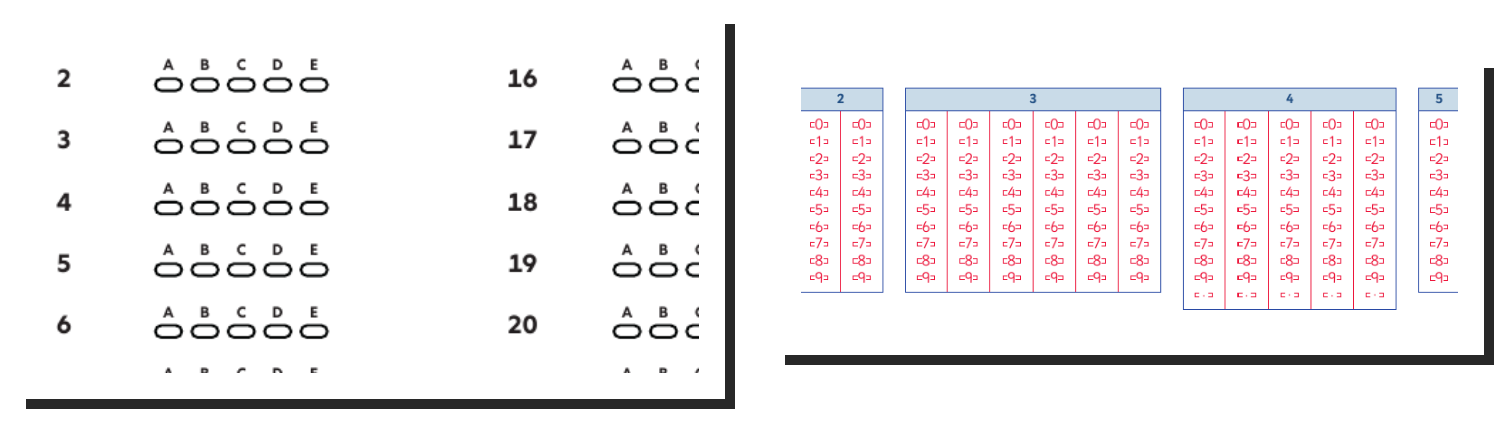
A child who has only ever practised A to E meets that sheet for the first time on the day. That’s why the papers we rebuild after each exam come with that exam’s own answer sheet, so the first time isn’t the real thing.
That’s why the Saturday classes test monthly from the first month, and the mock is as hard as the real exam from the start. It never gets easier. The children get better.
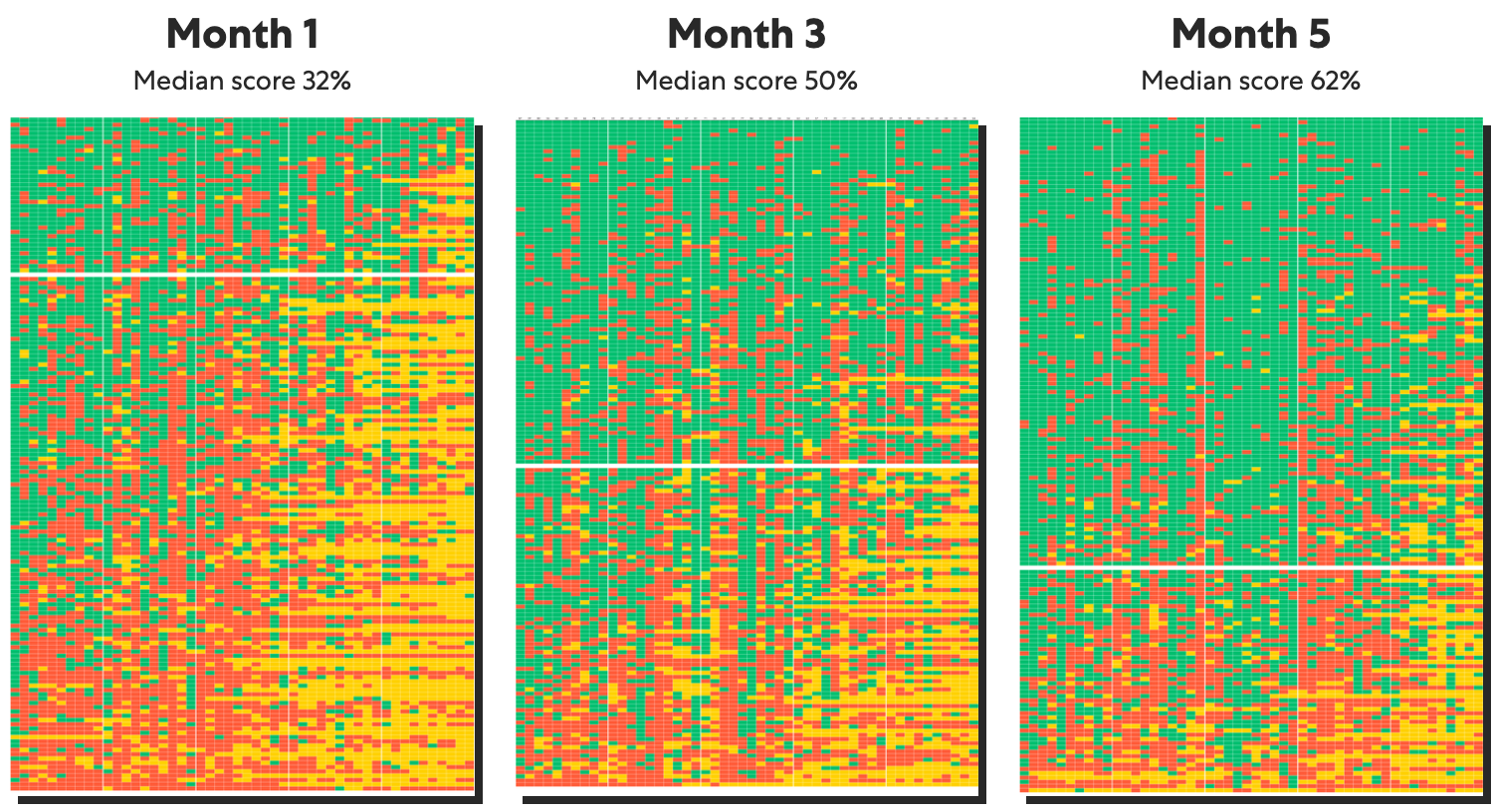
The teaching team marks the papers, and the results go out across the year group anonymously, so a family can see exactly where their child sits without anyone being named.
It is so important that children practice exam conditions regularly in order to improve their exam technique and speed.
MCPoppy, on Trustpilot
Most children do well with a steady year or two rather than a frantic few months. Starting early leaves room to build a habit without it taking over family life.
Two separate things have to happen, and families often discover the second one late.
Registering for the test. You do this directly with the schools or their test group, generally in the spring or early summer before the exam. The Sutton consortium’s Selective Eligibility Test is sat in mid September. There’s a hard cut off every year and the schools mean it, so check the dates on your own schools’ admissions pages rather than assuming they match somebody else’s.
Applying for a school place. Separately, you name your choices on your council’s common application form by 31 October of the year your child sits the test. Sitting the exam does not apply for a place. Miss this one and a brilliant score can’t help you. Offers go out on national offer day, usually 1 March.
Work back from those two dates and the year plans itself. There’s less to it than the forums suggest.
The ones parents usually ask straight after this one.